
The oil era (2015 to present)
Disponible solo en inglés
The 2015 Liza discovery in the Stabroek Block, first oil in December 2019, and how oil is changing Guyana.
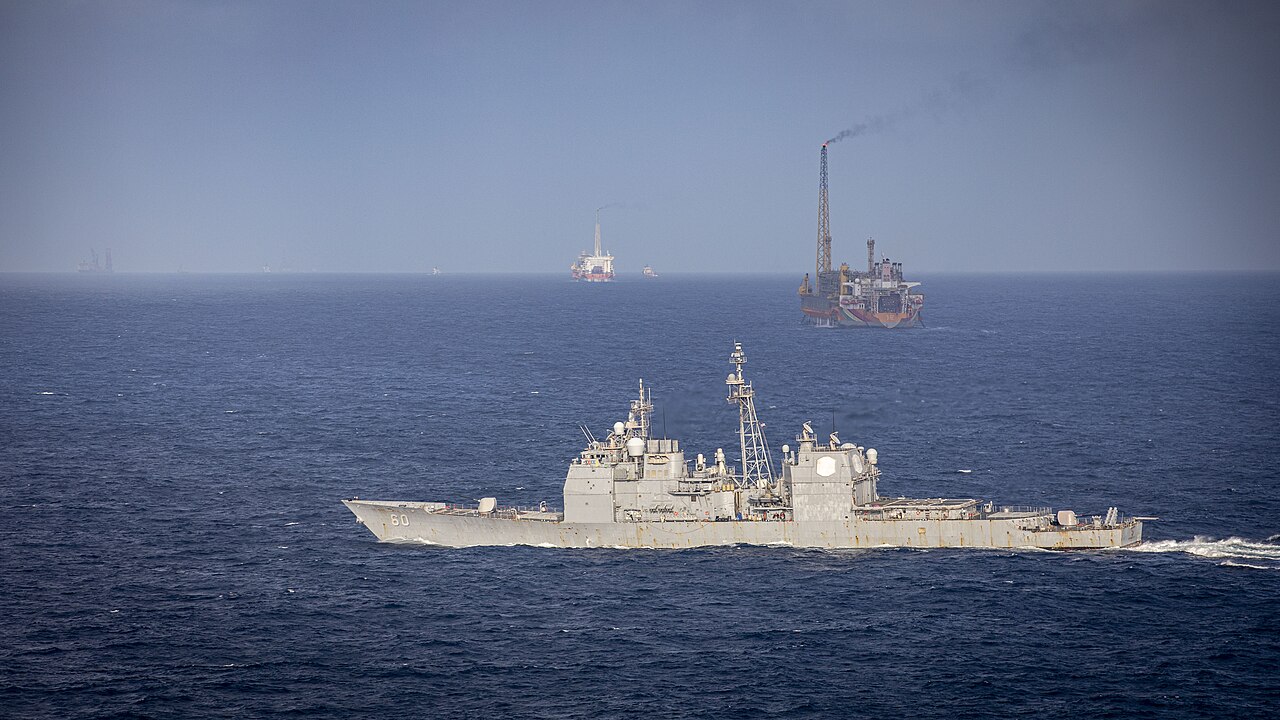
Guyana was historically a net importer of fuel.[1] That changed in 2015 when ExxonMobil found oil off the coast. Guyana is now one of the world's newest oil producers and one of its fastest growing economies.[1][2]
Before 2015
Companies including Shell, Total and Mobil searched for oil offshore and in the inland Takutu Basin from the 1950s, with little success.[1] In the 2000s a rig working for CGX Energy was turned away by Surinamese gunboats. A UN tribunal settled the sea border with Suriname in September 2007.[1][3]
Discovery
Esso, part of ExxonMobil, began exploring offshore in 2008. In May 2015 it announced the Liza-1 discovery about 200 km off the coast, in the Stabroek Block, an area of about 26,800 square km.[1] By May 2024 ExxonMobil estimated its discoveries at about 11 billion barrels of oil equivalent, from more than 30 finds.[1]
The block is operated by ExxonMobil Guyana (45%) with Chevron (30%) and the China National Offshore Oil Corporation, CNOOC (25%).[1]
Production
Liza Phase 1 began producing on 20 December 2019. Further projects started in February 2022 and November 2023.[1] Output reached roughly 645,000 to 660,000 barrels a day in 2024, depending on the source, with plans for about 1.3 million barrels a day by 2027.[1][2] In December 2024 Guyana became the world's third largest oil producer per person.[1]
Oil revenue is paid into Guyana's Natural Resource Fund. In the first quarter of 2025 the fund received about US$605.5 million.[2]
Debate
Oil has brought rapid growth, but also debate.[1]
- Contract terms: critics say the original Stabroek deal favoured the companies. Guyana introduced new model contracts in 2022 with a 10% royalty and corporate tax, but these do not apply to the existing Stabroek contract.[1]
- Resource curse: groups such as Transparency International have warned of the risks seen in other oil-rich countries.[1]
- Climate: Guyana is expanding oil production while its low-lying coast is highly exposed to climate change.[4]
- Border: the finds raised the stakes in the Border controversy.[1][5]
References
- "Petroleum industry in Guyana". Wikipedia. https://en.wikipedia.org/wiki/Petroleum_industry_in_Guyana (accessed 24 Oct 2026) Open source Checked 24 Oct 2026.
- "Economy of Guyana". Wikipedia. https://en.wikipedia.org/wiki/Economy_of_Guyana (accessed 24 Oct 2026) Open source Checked 24 Oct 2026.
- Richardson, Bonham C. and Menke, Jack K. "Guyana: Independence". Encyclopaedia Britannica. https://www.britannica.com/place/Guyana/Independence Open source
- "History of Guyana". Wikipedia. https://en.wikipedia.org/wiki/History_of_Guyana Open source
- "Guyana-Venezuela crisis (2023-2024)". Wikipedia. https://en.wikipedia.org/wiki/Guyana%E2%80%93Venezuela_crisis_(2023%E2%80%932024) Open source
Categories: History | Modern Guyana | Economy
Text CC BY-SA 4.0. Adapted in part from the Wikipedia articles listed under References (CC BY-SA 4.0). Images are credited under their own licences. Site contact: service@computingcore.net.