
Road to independence (1945 to 1966)
Disponible solo en inglés
From the founding of the PPP in 1950 to independence on 26 May 1966, including the 1953 suspension of the constitution and the unrest of 1962 to 1964.
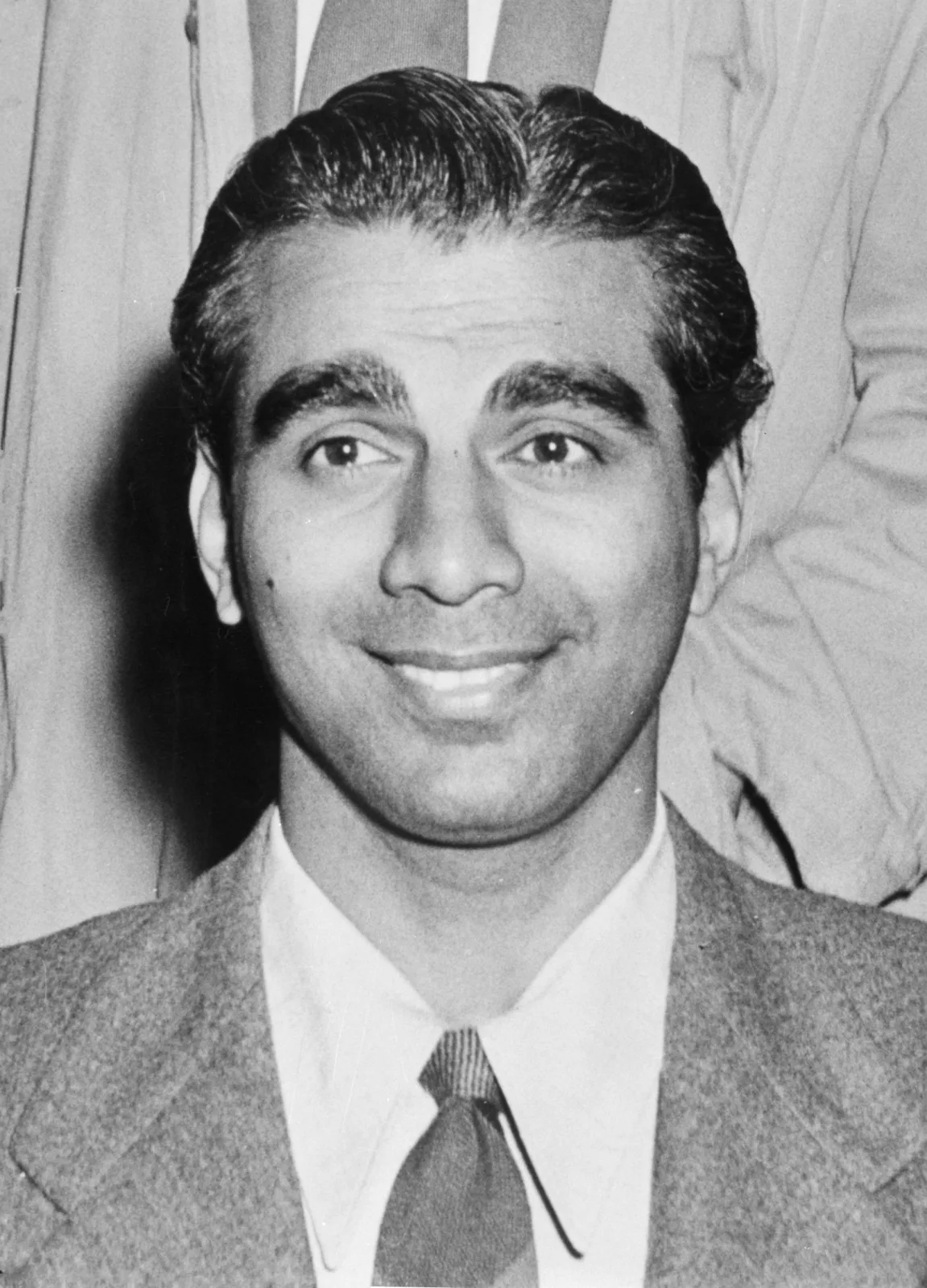
After the Second World War, demands for self-government grew across British Guiana. Two men dominated the next forty years of politics: Cheddi Jagan and Forbes Burnham.[1]
Two leaders
Cheddi Jagan was born in 1918 to parents who had come from India. He studied dentistry in the United States and returned in 1943 with his American wife, Janet Jagan (born Rosenberg), who became a major political figure in her own right.[1][2]
Forbes Burnham was born in 1923, the son of a headmaster at Kitty, near Georgetown. He studied law in London.[1][3]
The PPP and the 1953 election
Jagan's Political Affairs Committee, formed in 1946, grew into the People's Progressive Party (PPP), founded on 1 January 1950. Burnham joined as chairman. The early PPP drew support from both African and Indian Guyanese.[1]
A new constitution in 1953 gave every adult the vote.[1][4] In the April 1953 election the PPP won 18 of 24 seats.[1][5] The new government moved fast on reforms and clashed with the governor and business interests. When it passed a Labour Relations Act in October 1953, Britain suspended the constitution on 9 October, sent troops, and removed the government after 133 days.[1] An interim government ruled until 1957.[1]
The split
In 1955 the PPP split into rival wings led by Jagan and Burnham. In 1957 Burnham's wing merged with the United Democratic Party to form the People's National Congress (PNC).[1] From then on, the PPP drew its support mainly from Indo-Guyanese voters and the PNC mainly from Afro-Guyanese voters, a division that still marks Guyanese politics.[1][4]
The PPP won the elections of 1957 and 1961. After 1961 Jagan became Premier under a constitution that gave the colony internal self-government.[1]
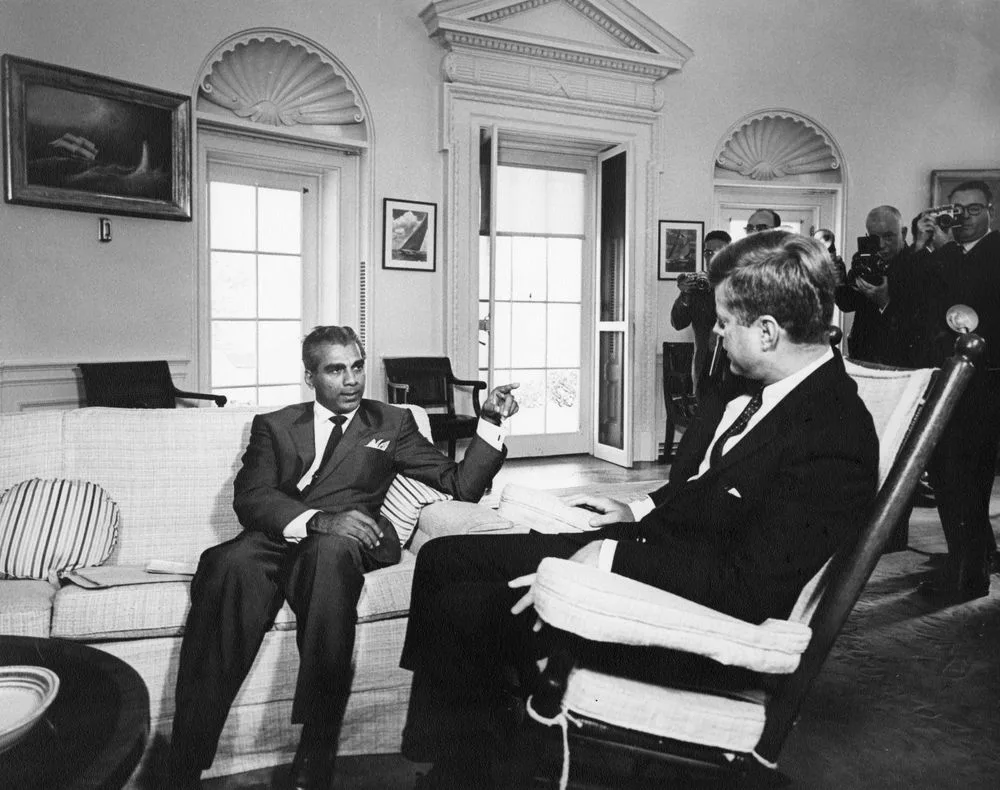
The Cold War and the unrest of 1962 to 1964
Jagan was an open Marxist, and both the British and US governments worked against him. US documents later showed covert programmes to support his opponents, and a US State Department historian acknowledged in 2005 that Washington aimed to keep Jagan from power.[1]
There were riots and strikes in 1962 and 1963, and in 1964 violence between Indo-Guyanese and Afro-Guyanese communities. By the end of the 1964 turmoil about 160 people were dead and more than 1,000 homes had been destroyed.[1] British troops returned.[4]
The 1964 election
For the December 1964 election Britain introduced proportional representation.[4] The PPP won the most votes (46%) but not a majority. The PNC (40%) and the conservative United Force (11%), led by Peter D'Aguiar, formed a coalition, and Burnham became Premier on 14 December 1964.[1]
Independence
A constitutional conference in London set the date. On 26 May 1966, British Guiana became independent as Guyana, with Burnham as Prime Minister. Guyana joined the Commonwealth the same year.[1][4] In February 1966, shortly before independence, Britain, British Guiana and Venezuela signed the Geneva Agreement on the border dispute (see Border controversy).[6]
References
- "History of Guyana". Wikipedia. https://en.wikipedia.org/wiki/History_of_Guyana (accessed 24 Oct 2026) Open source Checked 24 Oct 2026.
- "Cheddi Jagan". Wikipedia. https://en.wikipedia.org/wiki/Cheddi_Jagan Open source
- "Forbes Burnham". Wikipedia. https://en.wikipedia.org/wiki/Forbes_Burnham Open source
- Richardson, Bonham C. and Menke, Jack K. "Guyana: Independence". Encyclopaedia Britannica. https://www.britannica.com/place/Guyana/Independence (accessed 24 Oct 2026) Open source Checked 24 Oct 2026.
- "1953 British Guiana general election". Wikipedia. https://en.wikipedia.org/wiki/1953_British_Guiana_general_election Open source
- "Geneva Agreement (1966)". Wikipedia. https://en.wikipedia.org/wiki/Geneva_Agreement_(1966) Open source
Categories: History | Independence
Text CC BY-SA 4.0. Adapted in part from the Wikipedia articles listed under References (CC BY-SA 4.0). Images are credited under their own licences. Site contact: service@computingcore.net.