
The Co-operative Republic (1970)
Disponible solo en inglés
Guyana became a Co-operative Republic on 23 February 1970, ending its ties to the British monarchy. Mashramani celebrates the day.
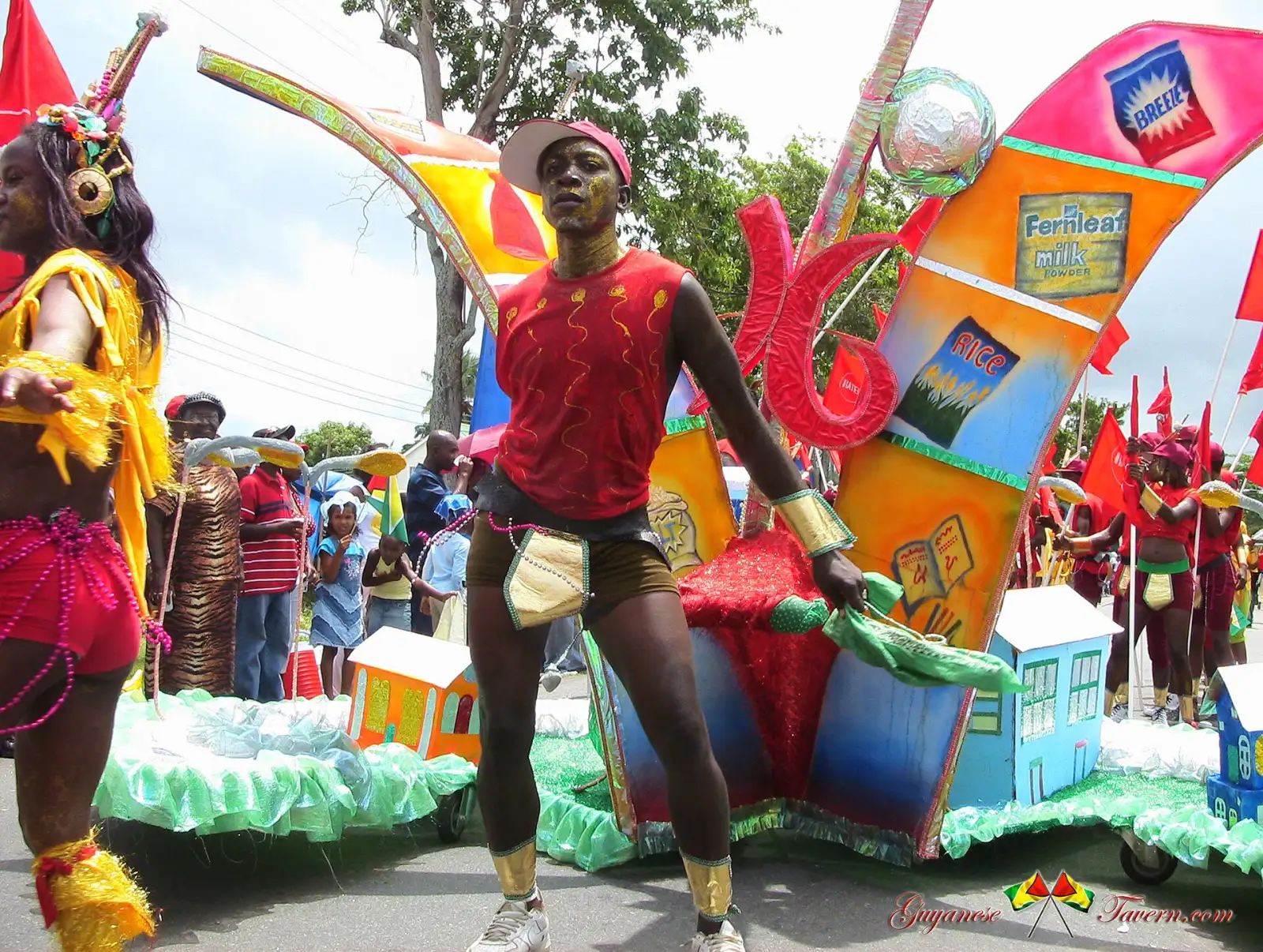
On 23 February 1970, Guyana declared itself a "Co-operative Republic" and cut its last constitutional tie to the British monarchy. A ceremonial President replaced the Governor General as head of state, while Prime Minister Forbes Burnham kept executive power.[1][2]
Why 23 February
The date was chosen to honour the start of the Berbice Uprising of 1763 led by Cuffy.[3]
The first President
Arthur Chung, a judge born at Windsor Forest on the West Coast of Demerara, served as President from 17 March 1970 to 6 October 1980. He was the first person of Chinese descent to be head of state of a country outside Asia.[4]
"Co-operative" socialism
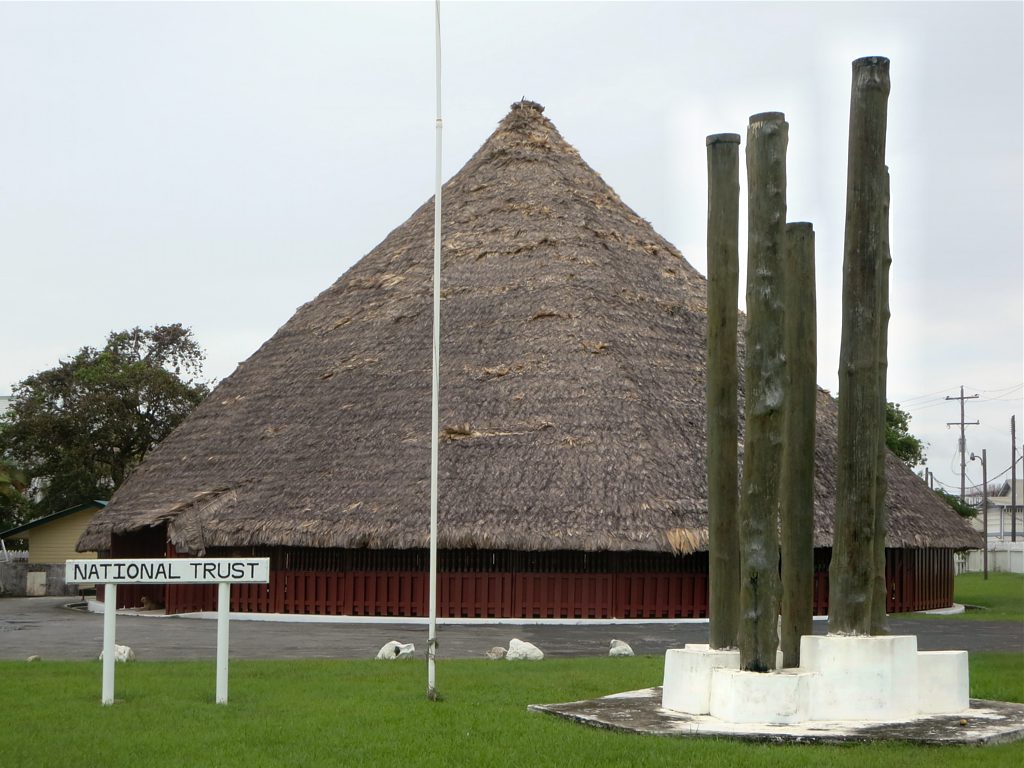
Burnham described the co-operative as the "instrument" through which ordinary people could pool their resources and take hold of the economy. He linked the idea to Amerindian traditions and to the villages bought by freed Africans, such as Victoria.[5] In the years after 1970, his government nationalised major foreign-owned industries, including bauxite mining, joined the Non-Aligned Movement, built ties with Cuba and opened relations with the People's Republic of China in 1972.[1][5] In August 1972 Georgetown hosted the Conference of Foreign Ministers of Non-Aligned Countries. The Umana Yana benab was built for that meeting by Wai Wai builders.[1][6]
In 1974 the Declaration of Sophia stated that the ruling party should have "paramountcy" over the government.[1][5] For the rest of this period see The Burnham and Jagan eras.
Mashramani
Mashramani, or "Mash", is the national festival held on Republic Day. The word comes from an Amerindian term that Guyanese explain as "celebration after co-operative or hard work". It grew out of a Republic celebration first organised by the Jaycees of Linden, and now includes float parades, costume bands, steel band, calypso, soca and chutney competitions.[7]
References
- "History of Guyana". Wikipedia. https://en.wikipedia.org/wiki/History_of_Guyana (accessed 24 Oct 2026) Open source Checked 24 Oct 2026.
- Richardson, Bonham C. and Menke, Jack K. "Guyana: Independence". Encyclopaedia Britannica. https://www.britannica.com/place/Guyana/Independence (accessed 24 Oct 2026) Open source Checked 24 Oct 2026.
- "Berbice Rebellion". Wikipedia. https://en.wikipedia.org/wiki/Berbice_Rebellion Open source
- "Arthur Chung". Wikipedia. https://en.wikipedia.org/wiki/Arthur_Chung Open source
- "Forbes Burnham". Wikipedia. https://en.wikipedia.org/wiki/Forbes_Burnham Open source
- "Umana Yana". Wikipedia. https://en.wikipedia.org/wiki/Umana_Yana Open source
- "Mashramani". Wikipedia. https://en.wikipedia.org/wiki/Mashramani Open source
Categories: History | Independence
Text CC BY-SA 4.0. Adapted in part from the Wikipedia articles listed under References (CC BY-SA 4.0). Images are credited under their own licences. Site contact: service@computingcore.net.