
The Burnham and Jagan eras (1964 to 1999)
Two decades of PNC rule under Forbes Burnham and Desmond Hoyte, the return of free elections in 1992, and the presidencies of Cheddi and Janet Jagan.
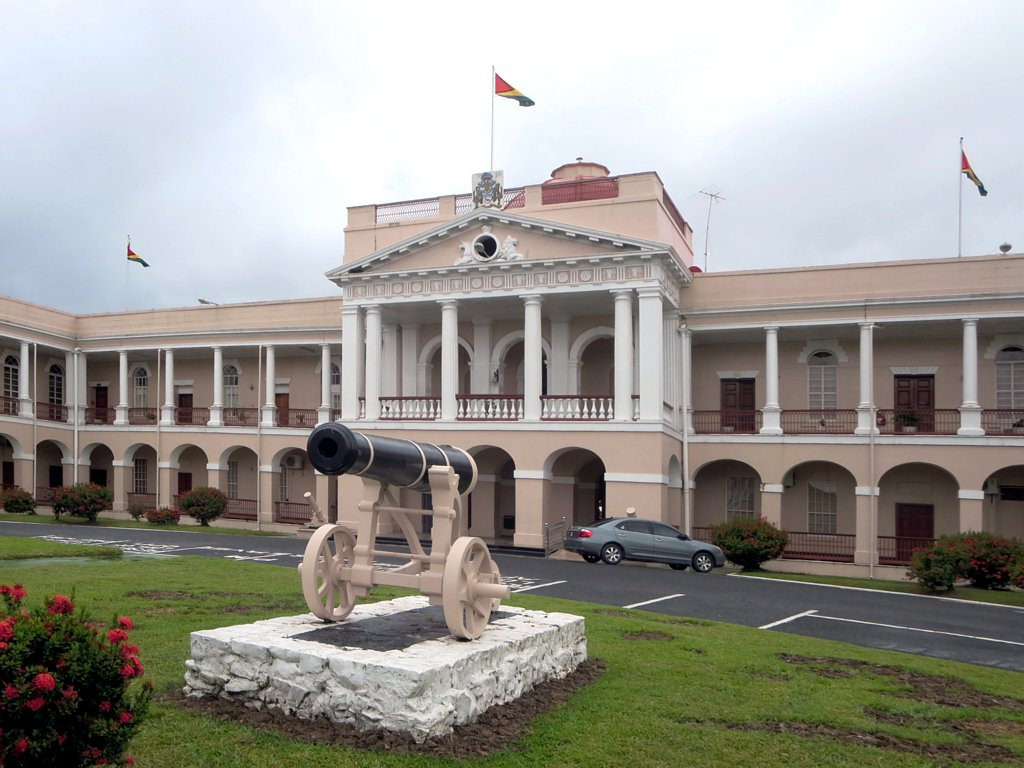
For most of the first three decades after independence, Guyana was governed by Forbes Burnham's People's National Congress (PNC). Cheddi Jagan's People's Progressive Party (PPP) returned to power in 1992 after the first internationally recognised free and fair election since 1964.[1][2]
Burnham in power (1964 to 1985)
Burnham led Guyana to independence in 1966 and to republic status in 1970 (see The Co-operative Republic). He served as Prime Minister until 1980 and then as the first executive President until his death in 1985.[3]
Elections under Burnham were widely criticised. Observers questioned the 1968 election, especially inflated overseas voter rolls, and international observers reported widespread fraud in the 1980 election.[1][2] In 1973 appeals to the Privy Council in London were abolished, and in 1978 a referendum let the sitting assembly stay in power. The government claimed a high turnout, while other estimates put it at only 10% to 14%.[1]
Early in 1969 ranchers in the Rupununi launched an armed uprising that was quickly put down by the Guyana Defence Force. Accounts differ on how much help the rebels had from Venezuela.[1][4]
The late 1970s and early 1980s were a time of economic decline. Shortages of basic goods, frequent power cuts and failing public services hit daily life hard.[1][2]
Political violence
The Working People's Alliance (WPA), founded in 1973 and led by figures such as historian Walter Rodney, became a multi-ethnic opposition voice.[1] Jesuit priest and journalist Bernard Darke was killed in July 1979.[2] On 13 June 1980, Rodney was killed by a bomb in his car in Georgetown.[5] A Commission of Inquiry that began in 2014 concluded that his death was a state-ordered killing and that Burnham must have known of the plot.[5]
Hoyte and reform (1985 to 1992)
Burnham died on 6 August 1985 and was succeeded by Desmond Hoyte.[1][3] Hoyte gradually moved away from state socialism. He opened the economy to private and foreign investment, abolished overseas voting and eased pressure on independent newspapers.[1][2] Under pressure at home and abroad, including from former US President Jimmy Carter, he agreed to electoral reform.[1]
The Jagan presidencies (1992 to 1999)
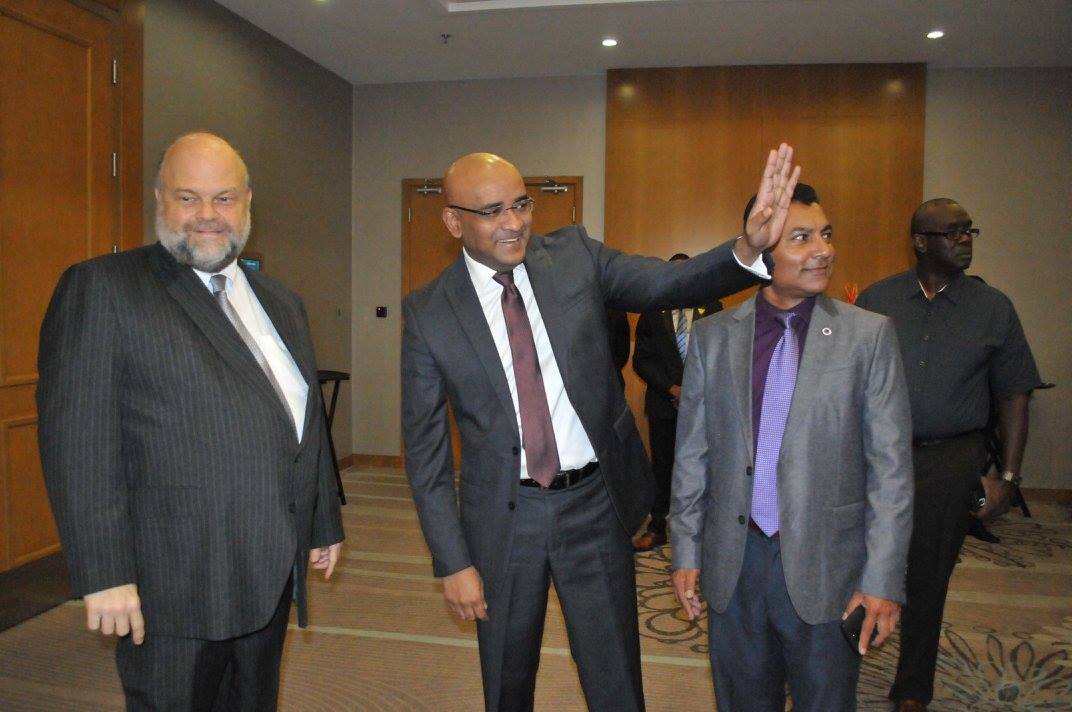
On 5 October 1992, Guyana held its first election since 1964 to be recognised internationally as free and fair. The PPP won and Cheddi Jagan was sworn in as President on 9 October 1992.[1][2] His government kept the economic reform programme agreed with the IMF.[1]
Jagan died in March 1997. His widow, Janet Jagan, became Prime Minister and then won the December 1997 election, becoming Guyana's first woman President and the first American-born woman to lead any country.[6] The PNC disputed the result and there were protests and riots, and a CARICOM team mediated.[1] Janet Jagan resigned for health reasons in August 1999 and was succeeded by Bharrat Jagdeo.[1][6] The story continues in Guyana since 1999.
References
- "History of Guyana". Wikipedia. https://en.wikipedia.org/wiki/History_of_Guyana (accessed 24 Oct 2026) Open source Checked 24 Oct 2026.
- Richardson, Bonham C. and Menke, Jack K. "Guyana: Independence". Encyclopaedia Britannica. https://www.britannica.com/place/Guyana/Independence (accessed 24 Oct 2026) Open source Checked 24 Oct 2026.
- "Forbes Burnham". Wikipedia. https://en.wikipedia.org/wiki/Forbes_Burnham Open source
- "Rupununi uprising". Wikipedia. https://en.wikipedia.org/wiki/Rupununi_uprising Open source
- "Walter Rodney". Wikipedia. https://en.wikipedia.org/wiki/Walter_Rodney Open source
- "Janet Jagan". Wikipedia. https://en.wikipedia.org/wiki/Janet_Jagan Open source
Categories: History | Modern Guyana
Text CC BY-SA 4.0. Adapted in part from the Wikipedia articles listed under References (CC BY-SA 4.0). Images are credited under their own licences. Site contact: service@computingcore.net.