
Border controversy with Venezuela
Venezuela's claim to the Essequibo region, from the 1899 Paris award to the case now before the International Court of Justice.
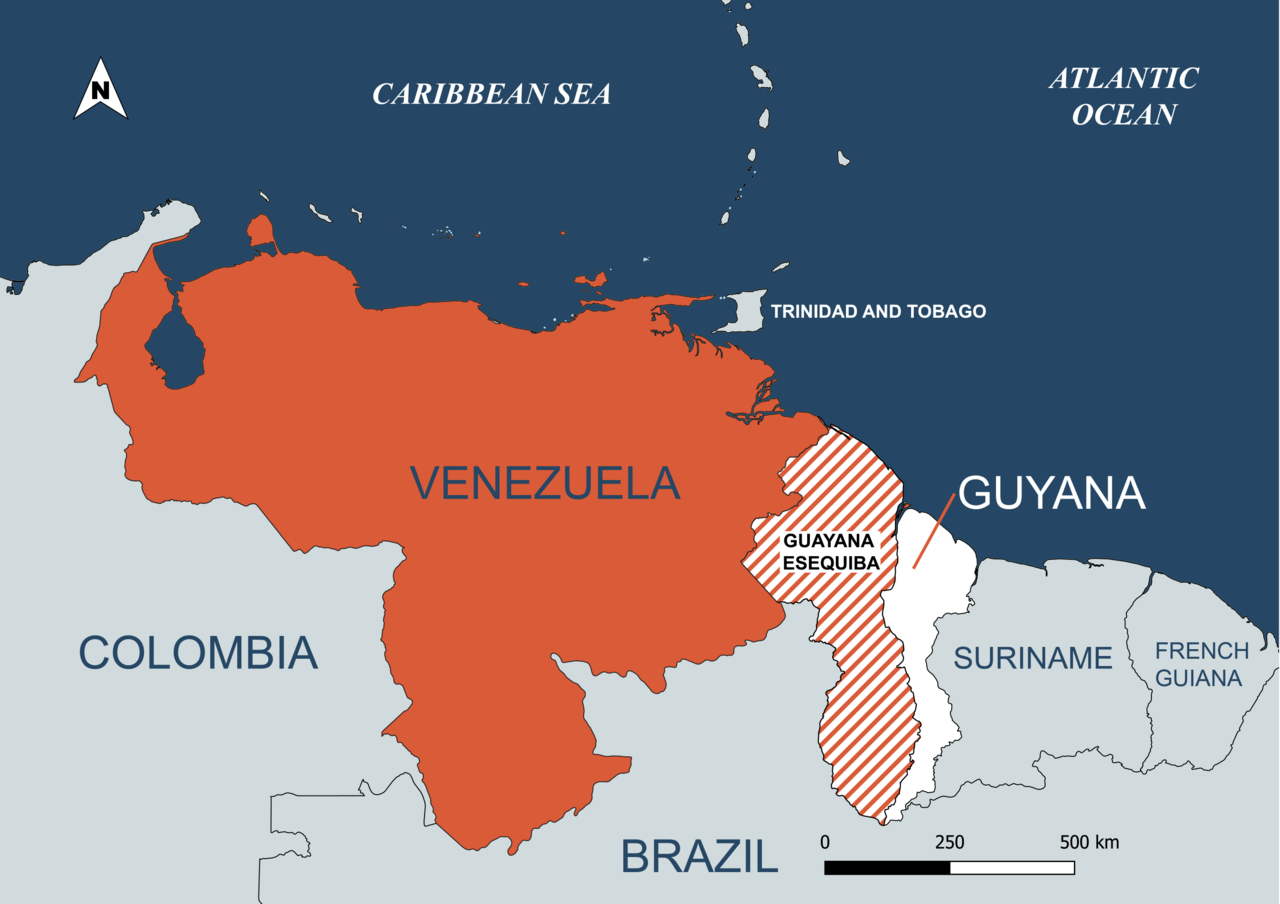
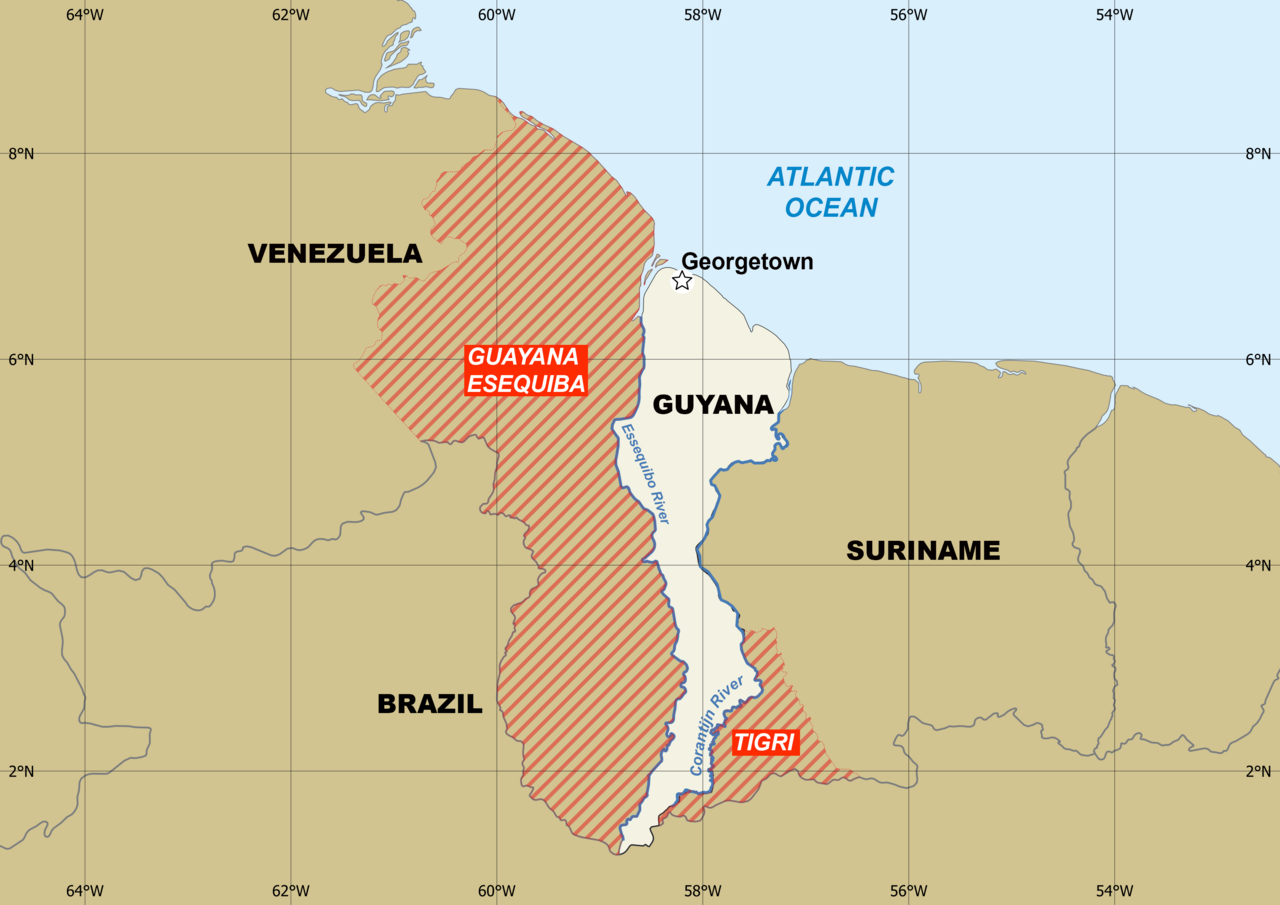
Venezuela claims all of Guyana west of the Essequibo River, a region often called Essequibo or, in Venezuela, Guayana Esequiba. Guyana administers the region and holds that the border was settled by an international arbitration in 1899. The case is now before the International Court of Justice (ICJ).[1][2]
Origins
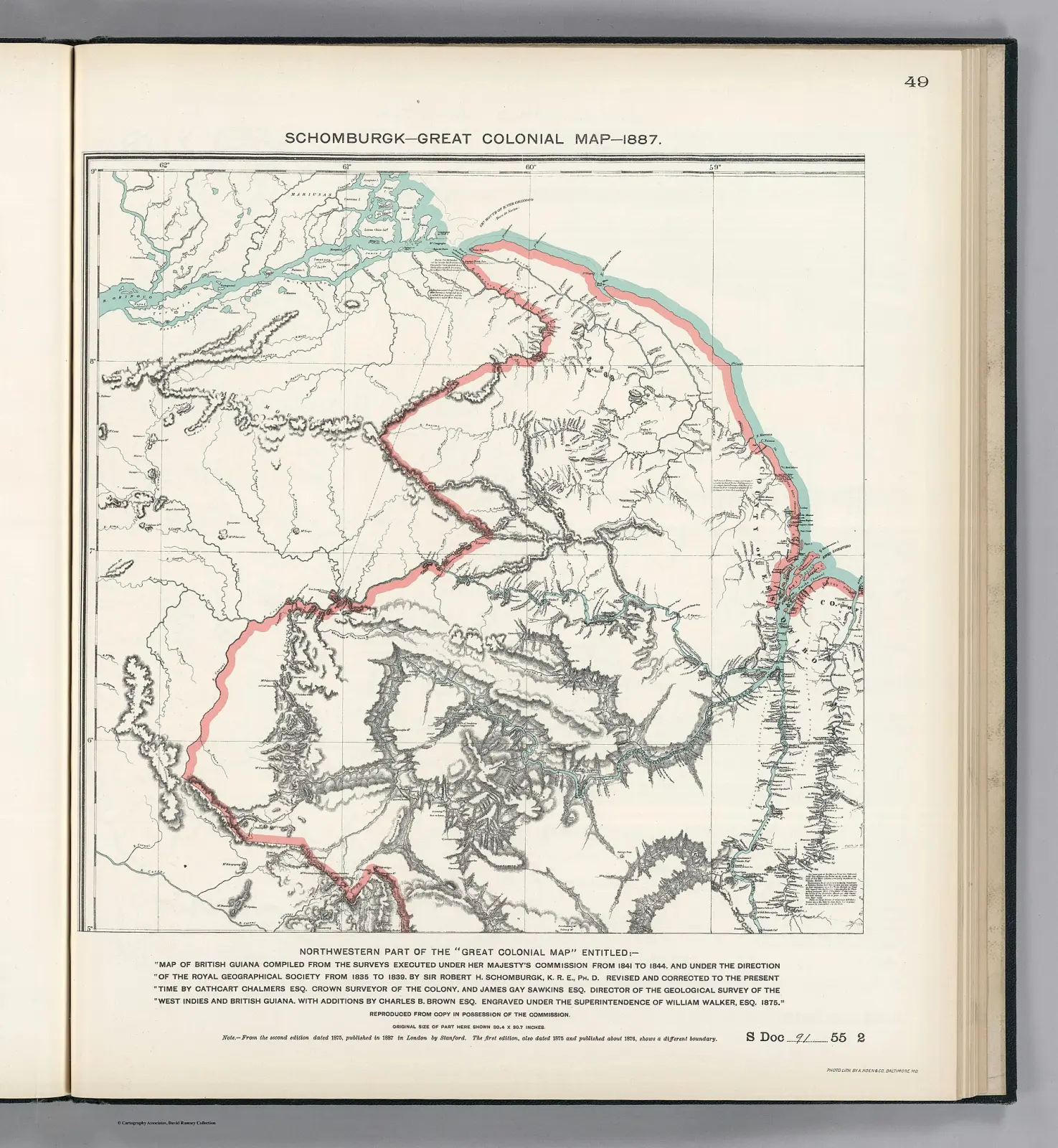
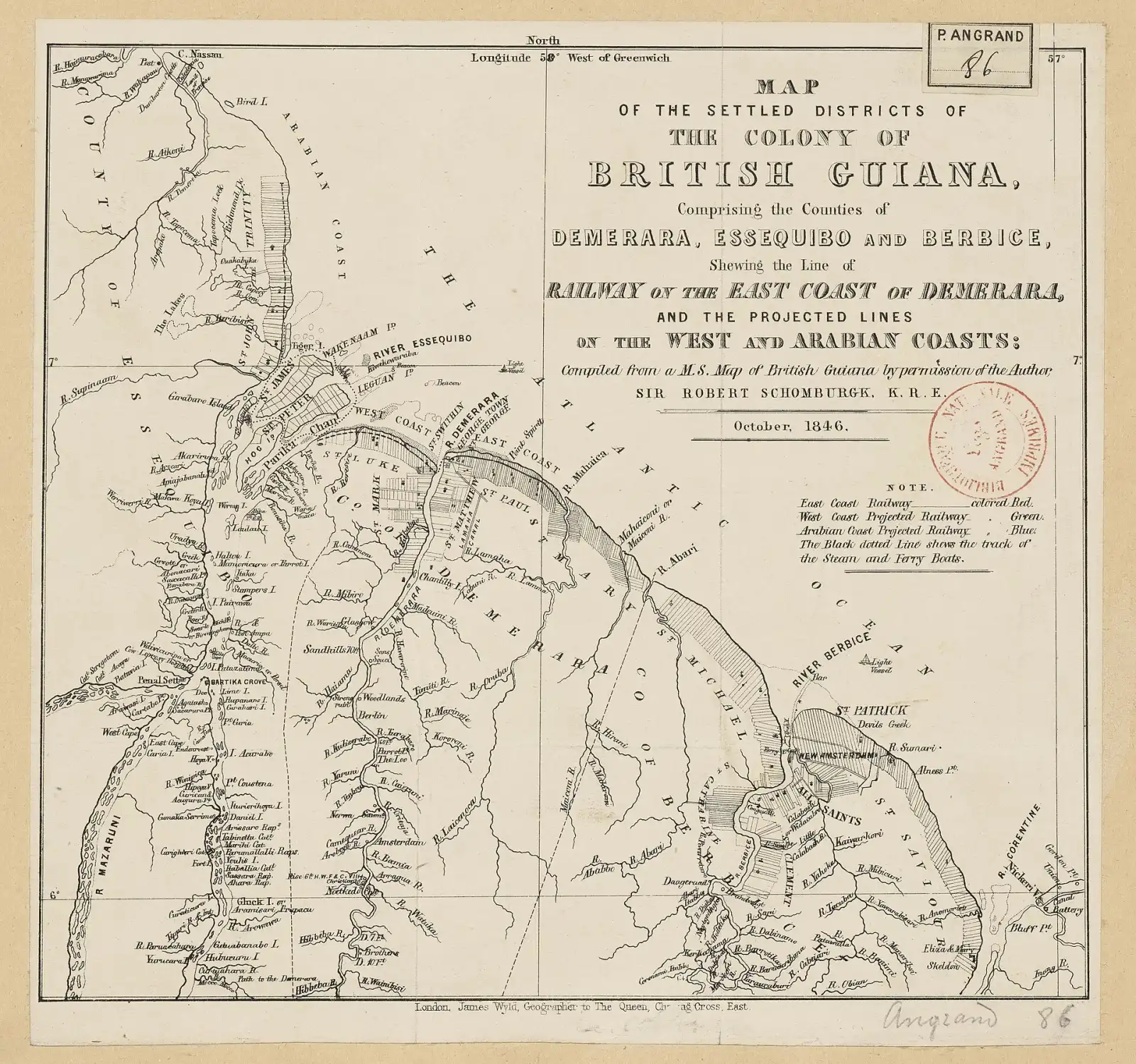
When Britain took over the Dutch colonies in 1814, their western limit with the Spanish (later Venezuelan) territory was not clearly marked.[3] In 1835 Britain asked the explorer Robert Hermann Schomburgk to survey the colony. His line, published in 1840, began at the mouth of the Orinoco, while Venezuelan maps showed the Essequibo River as the border.[3] Gold discoveries in the disputed area later in the 1800s raised the stakes.[3]
The 1899 award
Venezuela broke off relations with Britain in 1887 and asked the United States for support under the Monroe Doctrine. Britain agreed to arbitration in 1897.[3] On 3 October 1899 a tribunal in Paris, with two British, two American and one Russian member, gave about 94% of the disputed area to British Guiana. A joint commission marked the border, and both sides accepted it in 1905.[3]
Venezuela reopens the claim
In 1949 a memorandum by Severo Mallet-Prevost, a lawyer on Venezuela's side in 1899, was published after his death. It alleged that the award was the result of a political deal.[1] In 1962 Venezuela declared the 1899 award null and void.[1][3]
On 17 February 1966, shortly before independence, Britain, British Guiana and Venezuela signed the Geneva Agreement. It committed the parties to seek a "practical, peaceful and satisfactory" solution, and, if they could not agree, to let the UN Secretary-General choose a means of settlement.[1][4] In 1966 Venezuela occupied the Guyanese half of Ankoko Island in the Cuyuni River.[3] In 1970 the Port of Spain Protocol froze the claim for 12 years. When it expired in 1983, Venezuela chose not to extend it.[1]
The ICJ case
After years of UN "good offices" without a result, UN Secretary-General António Guterres chose the ICJ in January 2018.[1] Guyana filed its case on 29 March 2018.[2] Key steps since then:
| Date | Step |
|---|---|
| 18 Dec 2020 | Court finds it has jurisdiction over Guyana's claim[2] |
| 6 Apr 2023 | Court rejects Venezuela's preliminary objection[2] |
| 1 Dec 2023 | Provisional measures: Venezuela must not change the situation in the territory, which Guyana administers[2][5] |
| 3 Dec 2023 | Venezuela holds a referendum on creating a Venezuelan "Guayana Esequiba" state[5] |
| 14 Dec 2023 | Presidents of both countries meet in St Vincent and the Grenadines and agree not to use force[5] |
| Mar 2024 | Venezuela passes a law declaring a "Guayana Esequiba" state[5] |
| 1 May 2025 | Court orders Venezuela not to hold or prepare elections in the territory[2][6] |
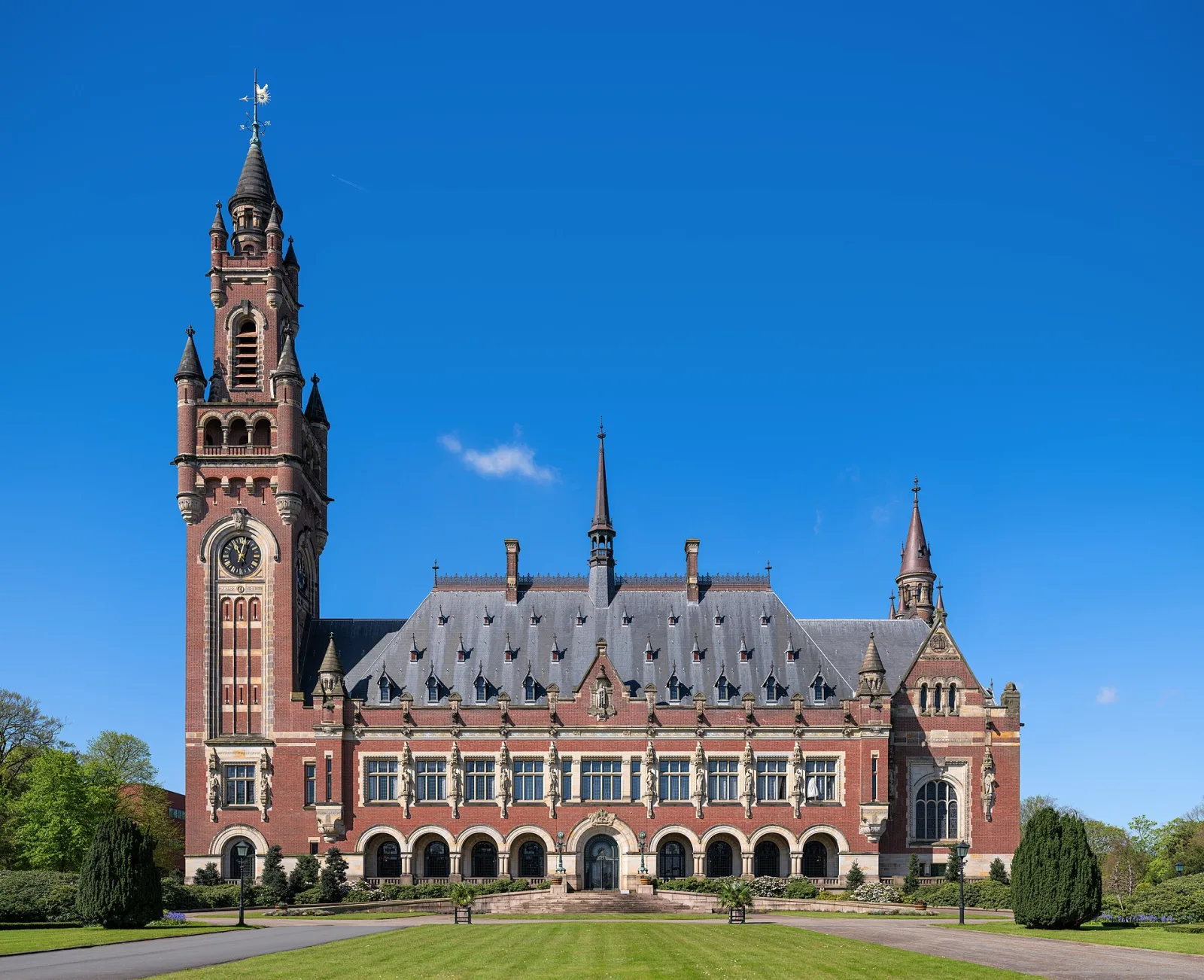
| 4 to 11 May 2026 | Public hearings on the merits at the Peace Palace, The Hague[2] |
As of 24 October 2026, the ICJ's case page shows no final judgment yet.[2]
Oil and the crisis of 2023
Large oil finds off Guyana from 2015 raised tensions. In September 2023 Guyana granted new oil licences in waters Venezuela claims, and in late 2023 Venezuela built up forces near the border. Brazil reinforced its own border, and CARICOM, the Commonwealth and the Organization of American States criticised Venezuela's referendum.[3][5]
The Suriname dispute
Suriname also claims the New River Triangle in Guyana's south east.[7] The two countries' sea border was settled by a UN tribunal in 2007.[8]
References
- "Guyana-Venezuela territorial dispute". Wikipedia. https://en.wikipedia.org/wiki/Guyana%E2%80%93Venezuela_territorial_dispute (accessed 24 Oct 2026) Open source Checked 24 Oct 2026.
- "Arbitral Award of 3 October 1899 (Guyana v. Venezuela)", case page. International Court of Justice. https://www.icj-cij.org/case/171 (accessed 24 Oct 2026) Open source Checked 24 Oct 2026.
- "History of Guyana". Wikipedia. https://en.wikipedia.org/wiki/History_of_Guyana Open source
- "Geneva Agreement (1966)". Wikipedia. https://en.wikipedia.org/wiki/Geneva_Agreement_(1966) Open source
- "Guyana-Venezuela crisis (2023-2024)". Wikipedia. https://en.wikipedia.org/wiki/Guyana%E2%80%93Venezuela_crisis_(2023%E2%80%932024) Open source
- "Summary of the Order of 1 May 2025". International Court of Justice. https://www.icj-cij.org/sites/default/files/case-related/171/171-20250502-sum-01-00-en.pdf Open source
- "Foreign travel advice: Guyana, Safety and security". UK Foreign, Commonwealth and Development Office. https://www.gov.uk/foreign-travel-advice/guyana/safety-and-security (accessed 24 Oct 2026) Open source Checked 24 Oct 2026.
- Richardson, Bonham C. and Menke, Jack K. "Guyana: Independence". Encyclopaedia Britannica. https://www.britannica.com/place/Guyana/Independence Open source
Categories: History | Modern Guyana | International relations
Text CC BY-SA 4.0. Adapted in part from the Wikipedia articles listed under References (CC BY-SA 4.0). Images are credited under their own licences. Site contact: service@computingcore.net.